Teen Patti, Teen Patti Basics
teen patti for teen patti players in India, how it works, what it costs and how long it takes.
What is Teen Patti?
Teen Patti is a three-card gambling card game that originated in the Indian subcontinent and is deeply woven into South Asian culture. The name translates literally to "three cards" in Hindi, and the game is sometimes called Flash or Flush across different regions of India. It is played with a standard 52-card deck, no jokers, and seats three to six players per table. Teen Patti is structurally related to the British game Three Card Brag and shares surface similarities with poker, but its own hand rankings, forced-bet system, and blind-play mechanic make it a distinctly Indian experience.
Traditionally played during Diwali gatherings and family card nights, Teen Patti has moved decisively onto online platforms where real-money tables run around the clock. On platforms like teenpattiwin.net, players across India, from Mumbai and Delhi to Bengaluru and Hyderabad, compete at stakes ranging from a ₹1 boot all the way up to high-roller tables. Unlike poker, there is no community card board; every outcome is decided purely by the three private cards in your hand and the confidence, or bluff, you project to the table.
Teen Patti for New Players
The most important concept for any new player to absorb before their first hand is the boot amount: a mandatory ante that every seated player contributes to the pot before cards are dealt. This guarantees there is always real money to play for from the opening card. New players should start at the lowest available boot tables (typically ₹1 to ₹2) to keep learning costs minimal while building instincts. Depositing is frictionless on most Indian platforms: top up instantly via PhonePe, Google Pay (GPay), or BHIM UPI with no bank card required, and funds appear in your wallet in under 60 seconds.
Every player then chooses to play Seen (Chaalak): look at your cards before betting, or Blind (Andhak): bet without viewing your hand. Blind players only need to match the current stake per round, while Seen players must bet at least double. This cost difference means playing blind occasionally is not reckless; it is a legitimate cost-control and psychological strategy. Compared to poker, where all players see their hole cards immediately, Teen Patti's blind option adds a unique layer of pressure and bluffing opportunity that beginners often underestimate.
How Teen Patti Works
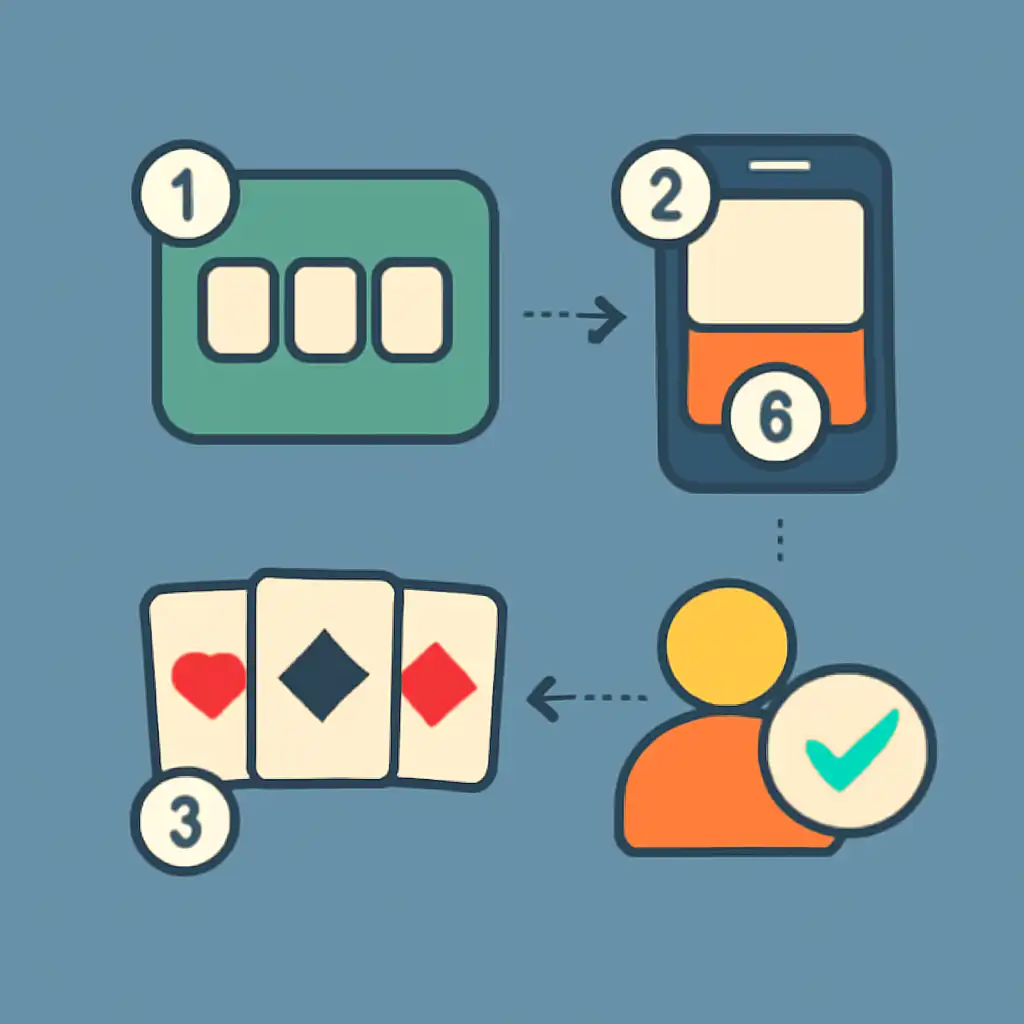
Once the boot is collected and three cards are dealt face-down to each player, the betting begins with the player to the dealer's left and moves clockwise. On each turn you must either Call (place the required bet to stay in the hand) or Fold (surrender your cards and exit the round). A Seen player may also request a Show: a direct head-to-head comparison of hands, against another Seen player for double the current stake. The player holding the stronger hand wins the entire pot; if both hands are equal in rank and value, the player who did not call for the Show wins.
Hand rankings from highest to lowest are: Trail (Three of a Kind) → Pure Sequence (Straight Flush) → Sequence (Straight) → Color (Flush) → Pair → High Card. A trail of three Aces beats every other possible combination; a high-card hand of 2-3-5 in mixed suits is the weakest holding on the table. Memorising these six tiers before you sit down, rather than recalling them mid-round under pressure, is the single baseline skill that separates confident players from hesitant, costly ones.